A binary options withdrawal problem needs a different response from a losing trade. The issue is whether money requested from the account reaches your bank, card or wallet, and whether the provider can justify any restriction.
If a platform demands another deposit before releasing your money, stop paying. Preserve the records and contact the financial institution that handled your payment. Do not keep trading to satisfy an account manager or chase a balance shown on screen. This guide covers how to assess a delayed withdrawal, document the problem and pursue the available complaint routes in Australia.
What to do when a withdrawal does not arrive
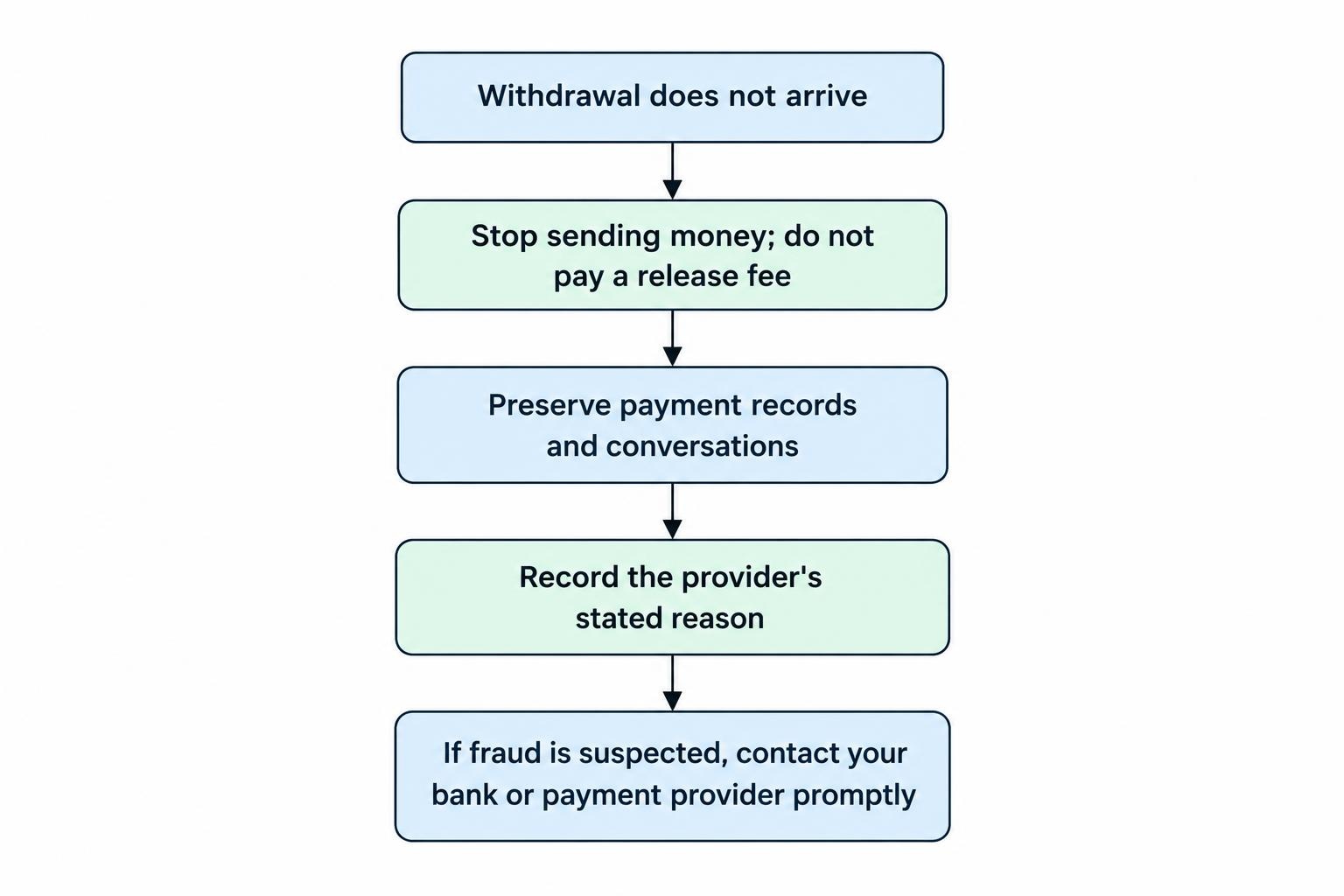
If you suspect fraud, contact your bank or card provider immediately rather than waiting for another promised payment date. Ask whether any transactions can be stopped and what steps will protect your account. These are the immediate actions in Scamwatch’s guidance for people who have been scammed.
- Stop sending money. Do not pay a new deposit, account upgrade or withdrawal release charge while the problem remains unresolved.
- Save the evidence. Download statements, payment receipts, withdrawal requests and conversations you can access safely.
- Record the explanation. Keep the provider’s stated reason for withholding payment, including any deadline or demand.
- Contact your payment provider. Explain how you paid, when you paid and why you believe the withdrawal failure may involve fraud.
Use contact details from your bank’s app, your card or an independently located official page. Do not call a supposed fraud department using a number supplied by the trading platform.
The Australian restriction matters
ASIC’s prohibition on the issue and distribution of binary options to retail clients took effect on 3 May 2021 and has been extended until 1 October 2031. The ASIC announcement extending the binary options ban confirms those dates.
Do not assume an overseas platform falls within an Australian protection scheme because its pages display Australian dollars or accept Australian customers. Establish which legal entity received your money. A brand name, account manager’s name and company name may point to different parties; record each rather than treating them as interchangeable.
Is it a processing delay or withdrawal obstruction?
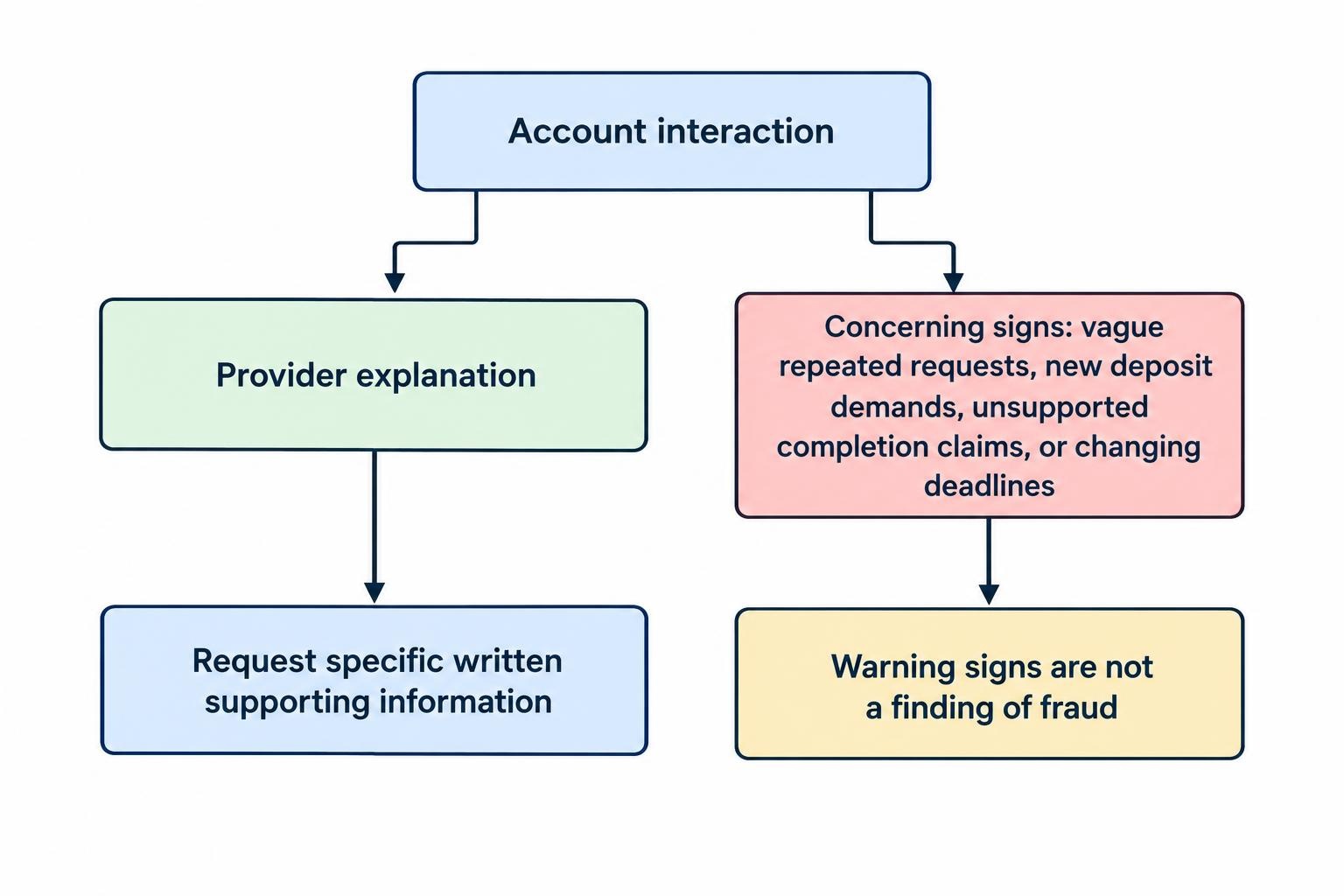
A missed payment date does not, by itself, prove fraud. Assess the explanation against the terms you received and the documents already submitted. Ask for a written answer identifying the outstanding issue, who must resolve it and the next action.
Cancelled withdrawal requests, demands for more deposits and unanswered messages are documented binary options fraud complaints. The SEC’s warning about binary options platform fraud also identifies misuse of identity documents. These are warning patterns, not a finding against every provider that misses a payment.
| Provider’s explanation | What to request | Reason for concern |
|---|---|---|
| Identity verification is incomplete | A written list of missing documents and a verified submission channel | Repeated requests without identifying what is missing or unacceptable |
| Payment details are incorrect | The exact discrepancy and instructions for correcting it | A demand to transfer money to prove ownership |
| A bonus prevents withdrawal | The accepted terms, acceptance record and calculation | A new condition appearing only after the withdrawal request |
| The payment has been sent | The payment date, amount, destination and traceable reference | A status label or screenshot with no supporting payment details |
| The account is under review | The reason for review and the next written update | Repeated deadlines accompanied by pressure to deposit or trade |
Do not accept “completed” on the trading dashboard as proof that your bank received a payment. Give the available reference to your own payment provider and ask it to check.
For bonus restrictions, preserve the version of the terms presented when you accepted the offer. Ask the provider to show how those terms apply to your account. That is not the same as accepting that the restriction is enforceable.
Do not pay to release a displayed balance
A demand for fresh money to obtain an existing balance is a serious warning. Scamwatch’s alert about fake crypto trading platforms documents fabricated trading data and fees demanded to release assets that are never released. Although that alert concerns crypto platforms, the practical lesson applies when assessing a crypto payment demand from a purported binary options provider: a convincing dashboard is not proof of available funds.
Consider this hypothetical example. You deposit A$2,000, the platform displays A$7,400, and support requests A$740 before approving withdrawal. The displayed A$7,400 does not justify risking another A$740. Record the deposit, claimed balance and fee demand separately.
Do not treat an emailed “tax certificate” or compliance invoice as independent verification. Check any claimed authority through independently obtained contact details. Our guide to fake tax and withdrawal release fees covers these demands in more detail.
Build an evidence file that someone else can follow
Prepare a short chronology rather than forwarding an unlabelled pile of screenshots. Start with the initial contact, then list deposits, withdrawal requests, responses and subsequent payment demands. Use exact dates, currencies and amounts.
For every deposit, record the payment method, recipient details, transaction reference and description on your statement. For every withdrawal, record the requested amount, request date, reference number, promised processing period and current status.
Keep original emails and exported conversations where possible. Save the relevant account terms, bonus conditions and withdrawal policy alongside them. Label files by date and retain an unchanged copy. Screenshots should include enough context to show which account or conversation they concern.
Separate money paid from money displayed. Suppose you deposited A$3,000, received A$200 back and now see A$9,500 on screen. Your records should show A$3,000 paid, A$200 received and A$9,500 claimed by the platform. Do not present the displayed figure as independently verified profit.
Also identify the payment path. If your bank statement names a payment intermediary rather than the trading brand, retain both names. If you bought cryptocurrency before sending it onwards, record both stages. This helps the person reviewing the complaint distinguish the purchase from the later transfer.
Put an unresolved withdrawal complaint in writing
For an identifiable provider, a written complaint creates a clearer record than repeated calls to an account manager. State the withdrawal amount and date, previous explanations and outcome requested. Ask for a complaint reference and written response.
You can adapt this wording:
Please treat this message as a formal complaint about my unpaid withdrawal. Please confirm why payment has not been made, identify the contractual basis for any restriction and state what action remains outstanding. If payment has already been sent, provide the payment date, amount, destination and transaction reference. Please also provide your complaint reference and written response.
Add your account identifier and supporting dates before sending it. Avoid including full card details, passwords or unnecessary identity documents.
If there is clear evidence of a scam, do not prolong contact to obtain another excuse. Preserve existing messages, stop responding and deal with your payment provider and reporting channels. Do not delay a bank notification while waiting for the platform’s complaints team.
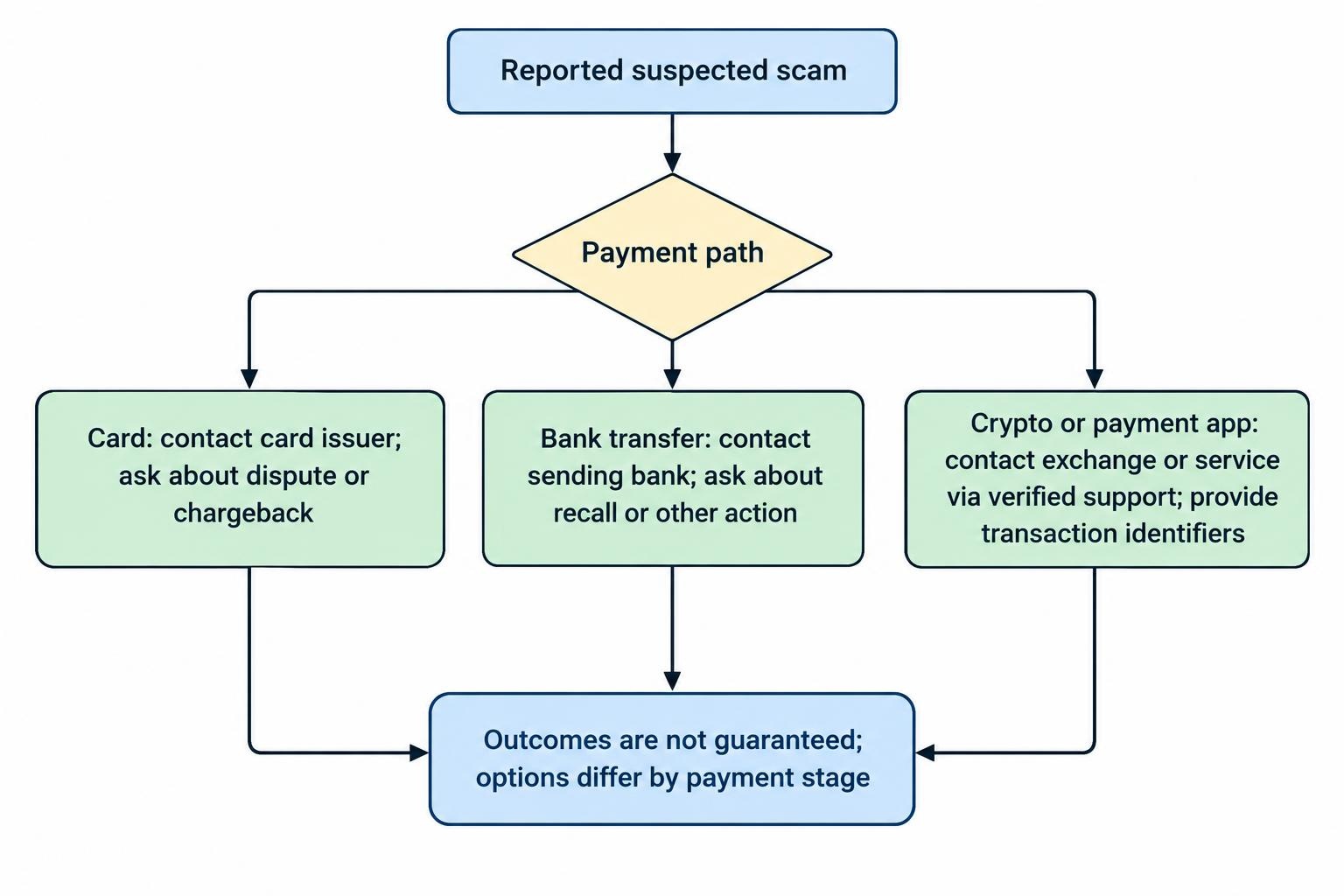
Recovery options depend on how you paid
Card payments
Ask your card issuer whether a dispute or chargeback is available for the transactions involved. Eligibility depends on the facts and card scheme rules, and deadlines apply. A chargeback request does not guarantee a refund. The AFCA chargebacks factsheet sets out the process and the importance of contacting your bank promptly.
Explain the actual failure: a promised refund not received, an unpaid withdrawal or a service you believe was misrepresented. Provide the supporting records and let the issuer assess the applicable grounds.
Be accurate about authorisation. If you approved a payment after being deceived, say so; do not describe it as a transaction you never authorised. Separate genuine trading losses from allegations about withheld funds or fraud. Our guide to trading payment chargebacks covers the evidence and questions to prepare.
Bank transfers
Contact the sending bank and ask whether it can attempt a recall or take other action concerning the recipient account. Give it the beneficiary name, account details, payment date, amount and reference.
Ask for a case number and record when you reported the problem. If the bank needs further evidence, request a clear list. Do not treat an attempted recall as confirmation that the funds will return, and do not send another transfer because the platform promises to refund both together.
Cryptocurrency and payment apps
Report a crypto payment to the exchange or service used to send it. For a money transfer app, contact the provider through its verified support channel. Supply transaction identifiers and destination details. These payment reporting routes appear in Moneysmart’s instructions after paying a scammer, alongside advice on protecting compromised personal information.
Explain the full chain if you bought crypto and then transferred it to a wallet supplied by the platform. Ask what action the service can take; do not assume the original purchase and the later transfer have the same dispute options.
When AFCA can help
AFCA is not a universal complaints service for every trading platform. A complaint must concern an AFCA member and satisfy its eligibility, time and jurisdiction requirements. The AFCA criteria for complaints it can consider explain those boundaries.
Check the legal entity rather than searching only the trading brand. If the offshore operator is not a member, do not assume AFCA can order it to release your account balance.
There may be a separate complaint about how a participating financial institution handled your payment or fraud report. Identify the conduct you dispute: what you reported, when you reported it, what response you received and why you believe that response was inadequate. This is different from asking the institution to guarantee a trading platform’s obligations.
Raise the matter through the financial institution’s formal complaints process and retain its response. The guide to broker complaints and AFCA covers escalation in more detail. Report suspected fraud as well, but do not mistake a scam report for a refund request.
Protect your accounts and avoid the next demand
If you supplied identity documents, tell your financial institutions and seek identity protection assistance. Change compromised or reused passwords and enable multifactor authentication. If someone accessed your device remotely, arrange a security check rather than continuing to use it for banking without assessment.
Treat unsolicited recovery offers with the same caution as the original withdrawal demand. Scamwatch warns that people who have lost money may be approached again by someone offering to recover it. A caller knowing your account balance or trading history is not proof of authority.
Before instructing any professional, independently verify their identity, role, fees and proposed work. Do not pay a supposed investigator or recovery agent because they claim your money has already been found. Our guide to trading fund recovery scams covers these follow-up approaches.
Keep decisions tied to records, not promises: money actually sent, money actually returned and action confirmed by your payment provider. An unpaid withdrawal is a reason to stop increasing your exposure, not a reason to deposit more.
This article was last updated on: October 22, 2026