Broker account verification checks whether the person using an account is who they claim to be. It can involve identity documents, address evidence, a facial check and questions about the money used to fund the account. The practical challenge is deciding whether a request is justified before handing over documents that could be misused.
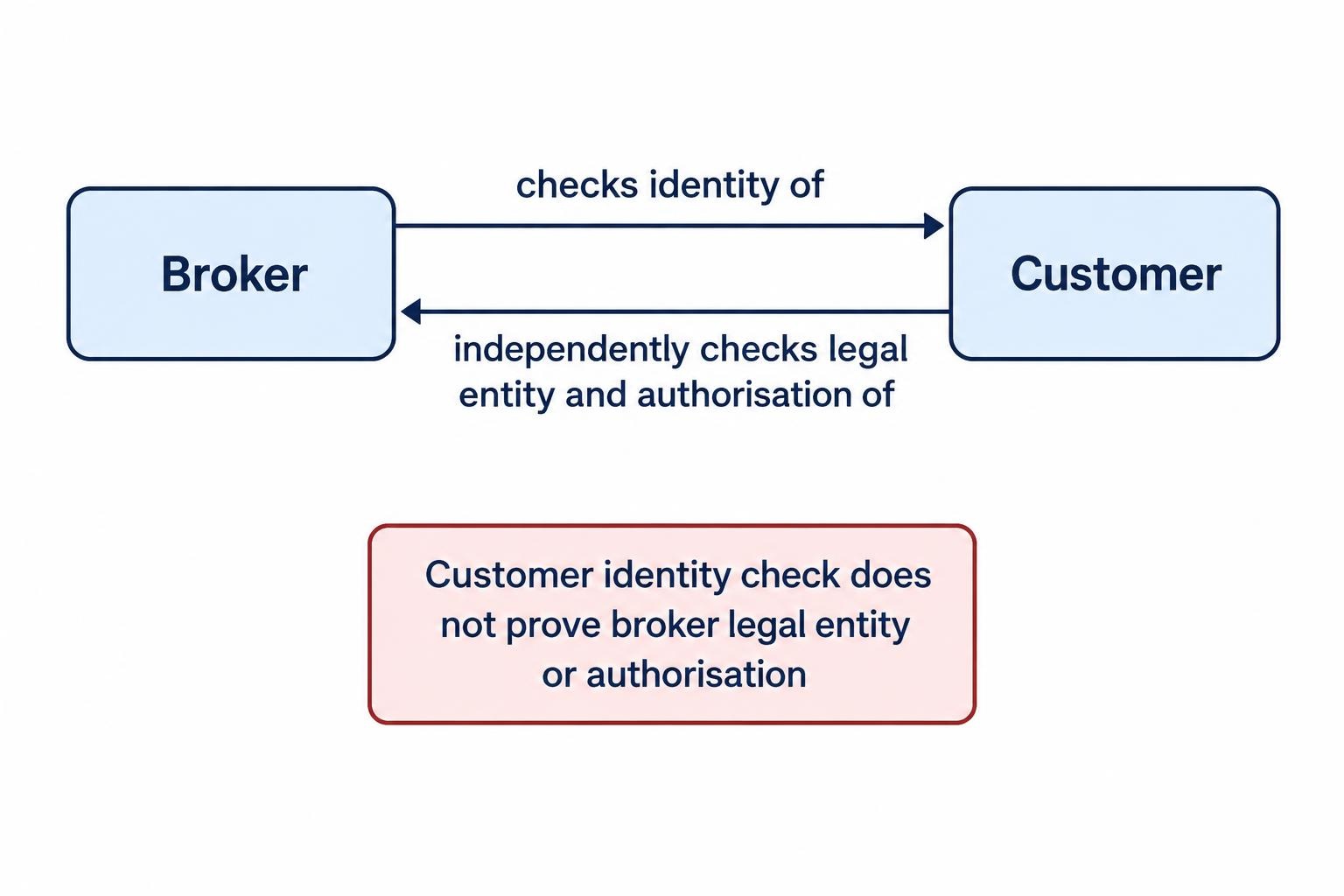
A completed identity check does not prove that a broker is authorised, financially sound or likely to honour a withdrawal. Verification works in one direction: the business checks you. You still need to check the business.
The Australian Position Comes First
ASIC’s prohibition on issuing and distributing binary options to retail clients took effect on 3 May 2021 and runs until 1 October 2031. The ASIC notice extending the binary options ban confirms those dates.
Uploading a passport does not create an exception to that prohibition. Nor should an Australian retail customer treat an offshore platform’s willingness to accept their documents as evidence that the offer is lawful.
This guide covers how to assess verification requests and handle document problems, including requests connected with existing accounts. It is not a recommendation to open or fund a binary options account.
Check the Recipient Before Sending Identification
Start with the legal entity named in the account agreement, rather than the trading brand. Record its name, claimed licence number, business address and contact details. Then check those details independently.
Company registration is not the same as financial services authorisation. A licence number copied onto a page is not enough either: scammers misuse the details of genuine licence holders. Moneysmart’s checks before investing cover licence verification and warn against relying on contact details supplied in an investment offer.
Ask which entity will receive the documents and whether a separate identity verification provider will process them. If an upload page uses another company’s name, request a written explanation of that relationship before continuing.
For the register checks themselves, use the guide to checking a broker’s licence. Keep that task separate from account approval. A green “verified” badge says nothing about whether the provider has permission to offer the product to you.
What KYC Verification Actually Checks
Know your customer, usually shortened to KYC, concerns customer identity and related information. Customer due diligence, or CDD, is the broader assessment of the customer relationship. These terms are not interchangeable with regulatory approval.
For businesses covered by Australian anti-money laundering obligations, AUSTRAC’s guidance on initial checks for individuals describes establishing identity through reliable information and checking that the applicant is the person identified. It includes photographic documents and online facial comparisons among the available approaches. This is guidance for covered businesses, not a universal document checklist for every offshore platform.
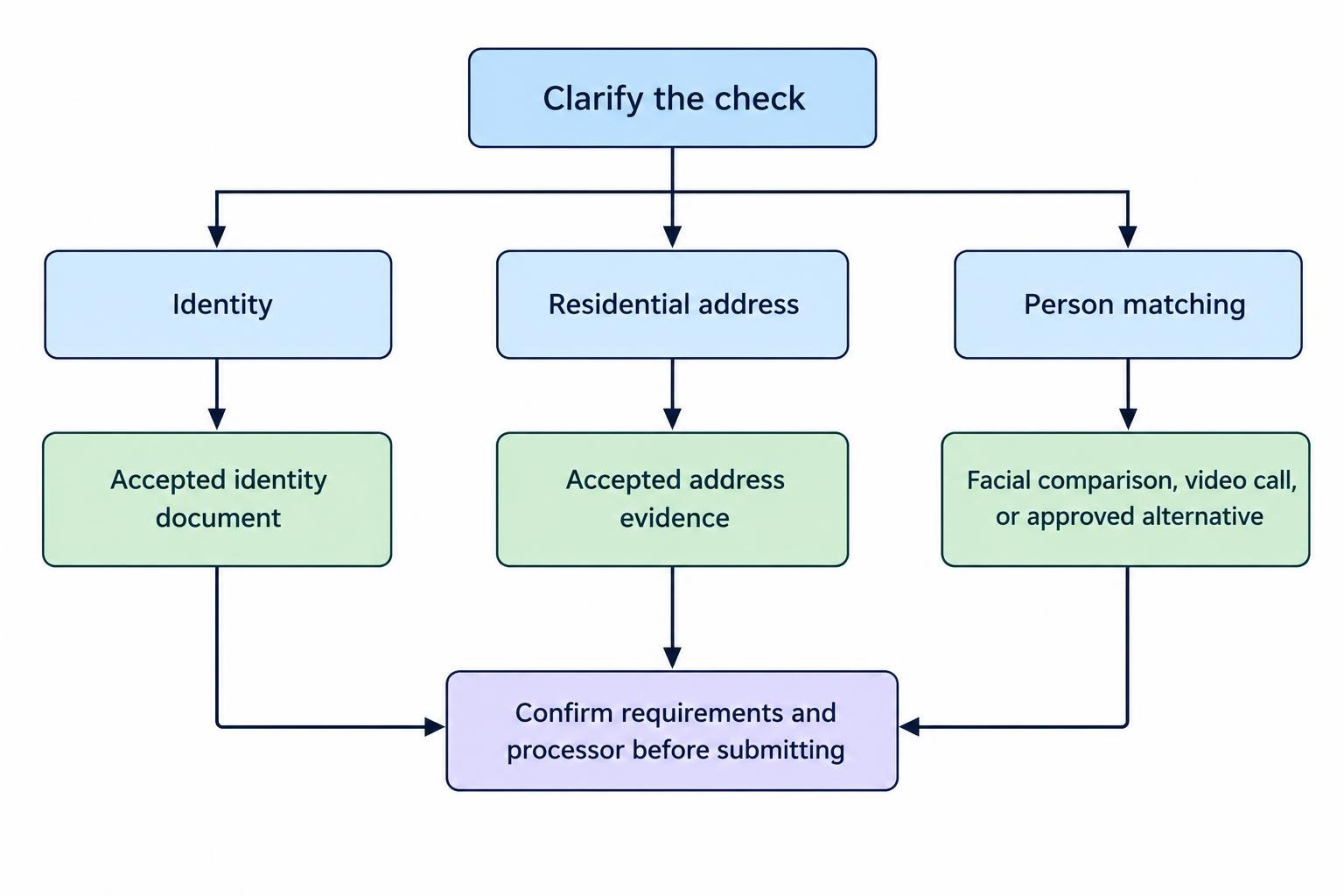
| Check | Possible evidence | What to clarify |
|---|---|---|
| Identity | Passport, driver licence or another accepted identity document | Which document and which pages are required? |
| Residential address | Utility bill or government notice showing the address | Which issuers and document dates are accepted? |
| Person matching | Facial comparison, video call or another approved method | Who processes the image, and is an alternative available? |
Before submitting anything, request the actual checklist. Do not assemble a larger identity pack “just in case”. More documents means more information leaving your control, without necessarily resolving the question being asked.
Names, Addresses and Document Differences
Compare the account profile with your documents before uploading them. Check spelling, middle names, date of birth and residential address. Where details differ, explain the difference rather than changing information to force a match.
Consider a hypothetical customer who opened an account under a shortened first name and later supplied a passport showing their full legal name. The sensible response is to request a profile correction and ask what supporting evidence is needed. Creating another account only adds another record to untangle.
If you have moved, changed your name or lack the requested document, ask for the accepted alternative in writing. Do not edit an old statement to show a new address, borrow someone else’s document or submit a manufactured bill.
Source of Funds Is a Different Question
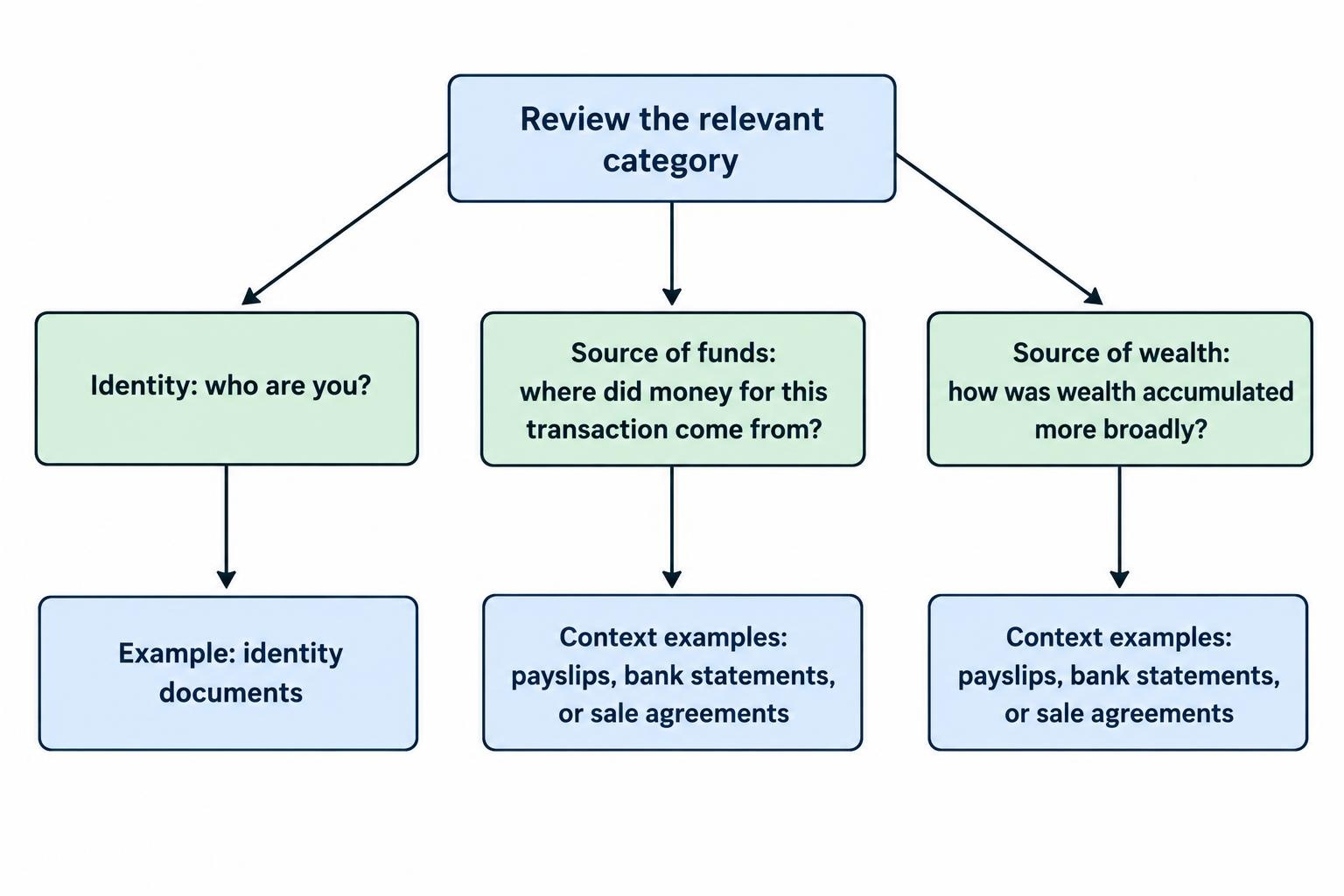
Identity evidence answers “who are you?” Source of funds evidence answers “how did you obtain this money?” A bank statement showing a transfer does not necessarily answer both.
In the Australian AML/CTF framework, source of funds concerns the origin of money used for a transaction, such as salary, business income or sale proceeds. Source of wealth concerns how a person accumulated their wealth more broadly. AUSTRAC’s source of funds and source of wealth guidance distinguishes these checks and describes evidence such as payslips, bank statements and sale agreements.
Ask which question the provider needs answered before sending financial records. If the request concerns salary used for a deposit, ask whether a payslip and the matching bank credit will address it. Avoid volunteering years of unrelated transactions.
An expanded request deserves an explanation of its purpose and scope. That does not mean every additional question is improper; it means “compliance” should not end the conversation about what information is required.
Protect Documents During Submission
For organisations covered by the Australian Privacy Act, collecting identity information must meet the applicable privacy requirements. Collection should be reasonably necessary, and the organisation should explain why it needs the information. The OAIC’s guidance on identity document scanning also covers security, retention and what customers should be told. Do not assume an offshore operator falls within the same protections.
Before uploading, check the privacy notice for the receiving entity, any processing provider, overseas handling and retention arrangements. Ask whether the business needs to retain the image or can complete the check another way.
Use an upload route reached through an independently checked account portal. Avoid following an unexpected message straight to a document collection page. If support changes the upload destination, confirm the reason through a contact channel you have already checked.
Keep images clear, with the required details readable. Ask whether redaction or a purpose watermark is accepted before modifying a copy. A watermark is not a security guarantee, and it should not obscure information needed for the check.
Keep a private submission log recording the date, destination, document type and support ticket number. Store any retained copies securely rather than leaving them in a shared photo folder.
Payment Evidence Should Not Expose Account Access
If asked to prove ownership of a payment method, request the minimum accepted evidence. That might mean asking whether a statement showing your name and the relevant transaction is sufficient, with unrelated information concealed.
Do not send a card PIN, card security code, banking password or cryptocurrency wallet recovery phrase as verification evidence. Do not disclose a one-time banking code to an account manager or approve a transaction you did not initiate.
For payment routing and withdrawal procedures, see the separate guide to broker deposits and withdrawals. Ownership evidence and permission to move money are different matters. Keep them different.
How to Handle Delays and Rejected Documents
Do not rely on an assumed approval period. Ask for the provider’s stated processing time, when that period starts and whether the submission is complete. Treat a quoted turnaround as an estimate unless the applicable terms establish something more definite.
If a document is rejected, request a reason that you can act on. “Verification failed” is not useful enough to guide another submission. Ask whether the issue concerns image quality, document type, expiry, missing information or a mismatch in the account details.
Then address that issue alone. If glare obscures the expiry date, take another photograph. If the account contains an incorrect name, request correction. If the document type is not accepted, ask for the alternatives before sending another batch.
For an account holding money, request written confirmation of:
- The outstanding verification requirement and how to satisfy it.
- Any restriction affecting the account while the review continues.
- The next review date and complaint route if the issue remains unresolved.
Save the response with the original request and submission record. Repeatedly uploading the same files without a clear reason creates more exposure and little progress.
If support tells you to keep trading during the review, do not treat that as a remedy for the document problem. Trading activity does not correct an unreadable passport or explain a withdrawal restriction.
Verification Requests Versus Withdrawal Pressure
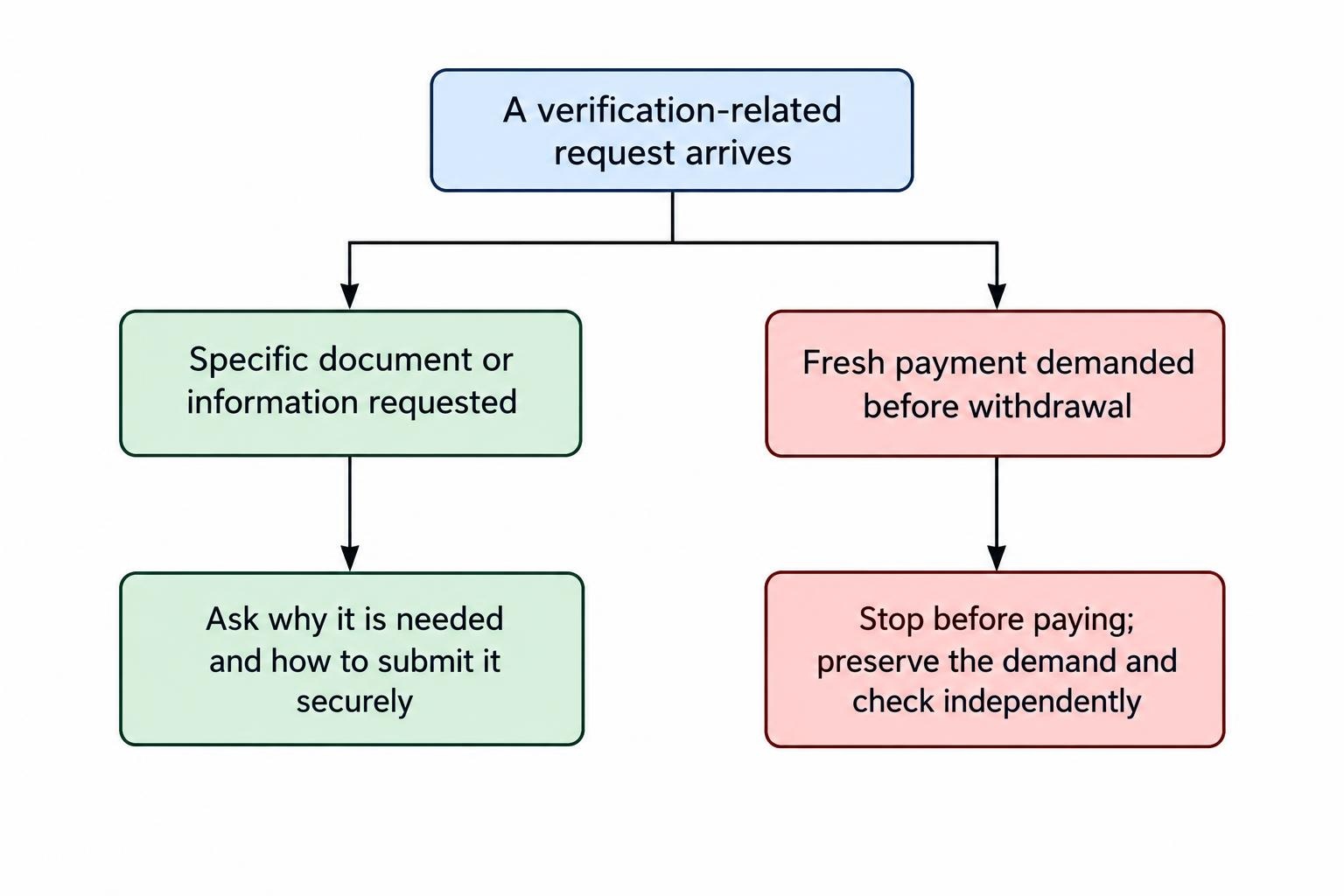
A request for evidence and a demand for fresh money are different. Be especially cautious if an account manager says you must pay a “verification deposit”, “AML clearance charge” or “release tax” before money can leave the account.
ASIC warns that requests to send money in order to withdraw funds are a sign of a likely scam. Its warning about scammers impersonating ASIC also cautions against claims that an investment has ASIC approval.
Stop before paying. Preserve the demand and ask for its contractual basis, the recipient’s legal name and an itemised explanation. Do not let a countdown timer or threat of account cancellation replace independent checks.
Consider a hypothetical account showing a $4,000 balance, followed by a demand for a new $600 payment to finish KYC. Sending the $600 does not verify the displayed balance or establish that it can be withdrawn. It creates another payment at risk.
Keep ordinary document questions separate from any request to buy an account upgrade, increase turnover or deposit more capital. Ask for the withdrawal request to be addressed on its existing facts.
If You Have Already Sent ID to a Suspicious Platform
Stop sending further documents or money while you assess the situation. Preserve the account agreement, upload confirmations, messages, payment receipts and the addresses of the pages involved.
If financial information or payments are affected, contact your bank or card provider immediately. Explain what you disclosed and ask about protective action. For identity exposure, seek advice from IDCARE and contact the issuer of the affected document about appropriate next steps. Scamwatch’s steps after a suspected scam cover bank contact, identity support, reporting and follow-up scam warnings.
Change any reused passwords and review account access from a trusted device. If you granted remote access, stop using that connection and seek help securing the device before accessing financial accounts.
Do not rely on the platform’s promise that it has deleted your documents. Keep the deletion request and response, but base protective action on what was disclosed. Be cautious of anyone who contacts you offering paid recovery or claiming they can retrieve the documents from a scammer.
Before You Close the Account
Ask for a final account statement, the status of any withdrawal and written confirmation of closure. Separately ask what identity information will be retained, why it will be retained and for how long. Do not assume that closing the trading account answers those questions.
The account closure guide covers the wider exit process. For verification, keep the decision simple: establish who is asking, identify the purpose, provide no more than necessary and stop if the request turns into pressure for money or account access.
This article was last updated on: October 22, 2026